


























































































































































Guide
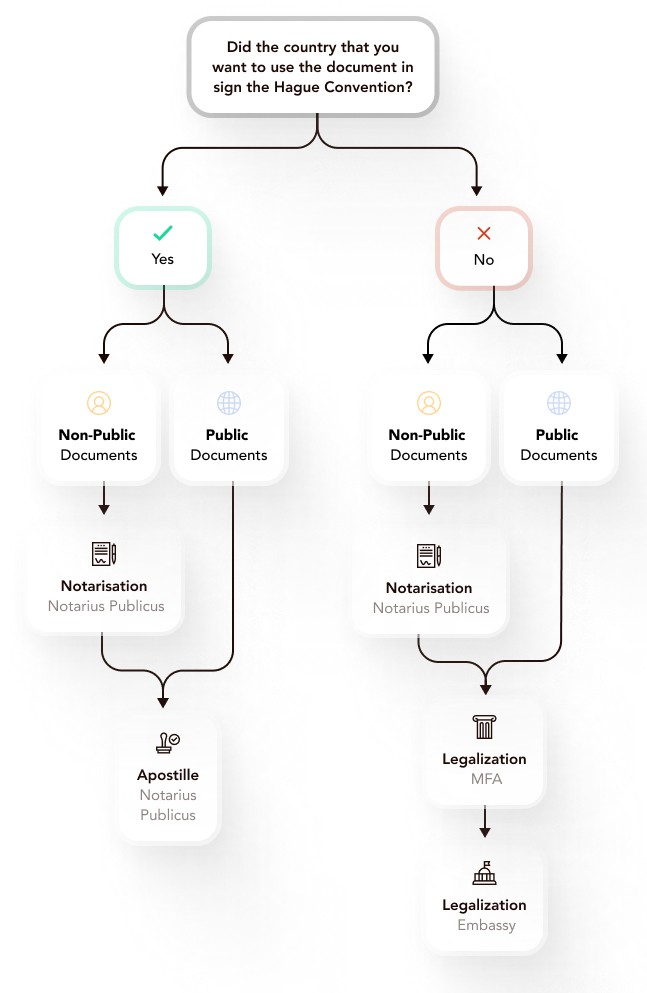
We work on a daily basis with notarization, apostille, translations, and legalizations at the Ministry of Foreign Affairs, embassies, and the Chamber of Commerce. There are many different steps and regulations involved in the legalization process, and it is not always easy to understand the procedure. That is why Legalisering.se has created a map that guides you step by step.
What Are Public Documents?
Public documents from a Swedish governmental authority:
- Certificates/transcripts from universities and higher education institutions
- Documents/records from the Swedish Social Insurance Agency (Försäkringskassan) and the Public Employment Service (Arbetsförmedlingen)
- Documents/records from the National and Regional Archives
- Documents/records not issued in Sweden but certified by the respective country’s embassy/consulate in Sweden
- Signatures from doctors, licensed pharmacists, licensed veterinarians, midwives, and other professions licensed by the National Board of Health and Welfare (Socialstyrelsen) or the Swedish Board of Agriculture (Jordbruksverket)
- Extracts from registers and other police records
- Swedish documents/records signed by a Notary Public
- Swedish documents/records (invoices, VAT reports, certificates of origin, trademark registrations, and other import/export documents) signed by Swedish Chambers of Commerce
- Marriage certificates issued by civil marriage officiants
- Translations made by an authorized translator appointed by the Swedish Legal, Financial and Administrative Services Agency (Kammarkollegiet)
What Are Not Considered Public Documents?
- Copies that lack an original signature
- Documents issued by private individuals
- Powers of attorney
- Certificates/documents from schools other than universities and higher education institutions
- Invoices, VAT reports, certificates of origin, trademark registrations, and other import/export documents (these can instead be certified by the Chamber of Commerce)
- Documents from banks, lawyers, and private companies
- Documents from regional and municipal archives
- Marriage certificates from non-civil marriage officiants (e.g., the Church of Sweden or foreign religious organizations in Sweden)
- Documents translated by a translator who is not authorized by Kammarkollegiet
Is a Translation Required in the Legalization Process?
A translation is often needed since many documents are issued in Swedish, and foreign authorities may not understand the language. Therefore, documents may need to be translated.
When Should the Translation Be Done—Before or After Legalization?
The timing of the translation depends on the recipient. Some embassies require the translation before legalization, while others require it afterward.
Is an Authorized Translation Necessary?
In cases where we know that the translation will be legalized or stamped with an apostille, we strive to use authorized translators. Depending on the language, the translator’s availability, and the urgency of the case, we may also use regular translators. As a competent company, we can always provide a certification if needed.